

DESIGN OF A HYDROGEL-BASED MICROFLUIDIC DEVICE FOR VESSEL-ON-A-CHIP SYSTEMS
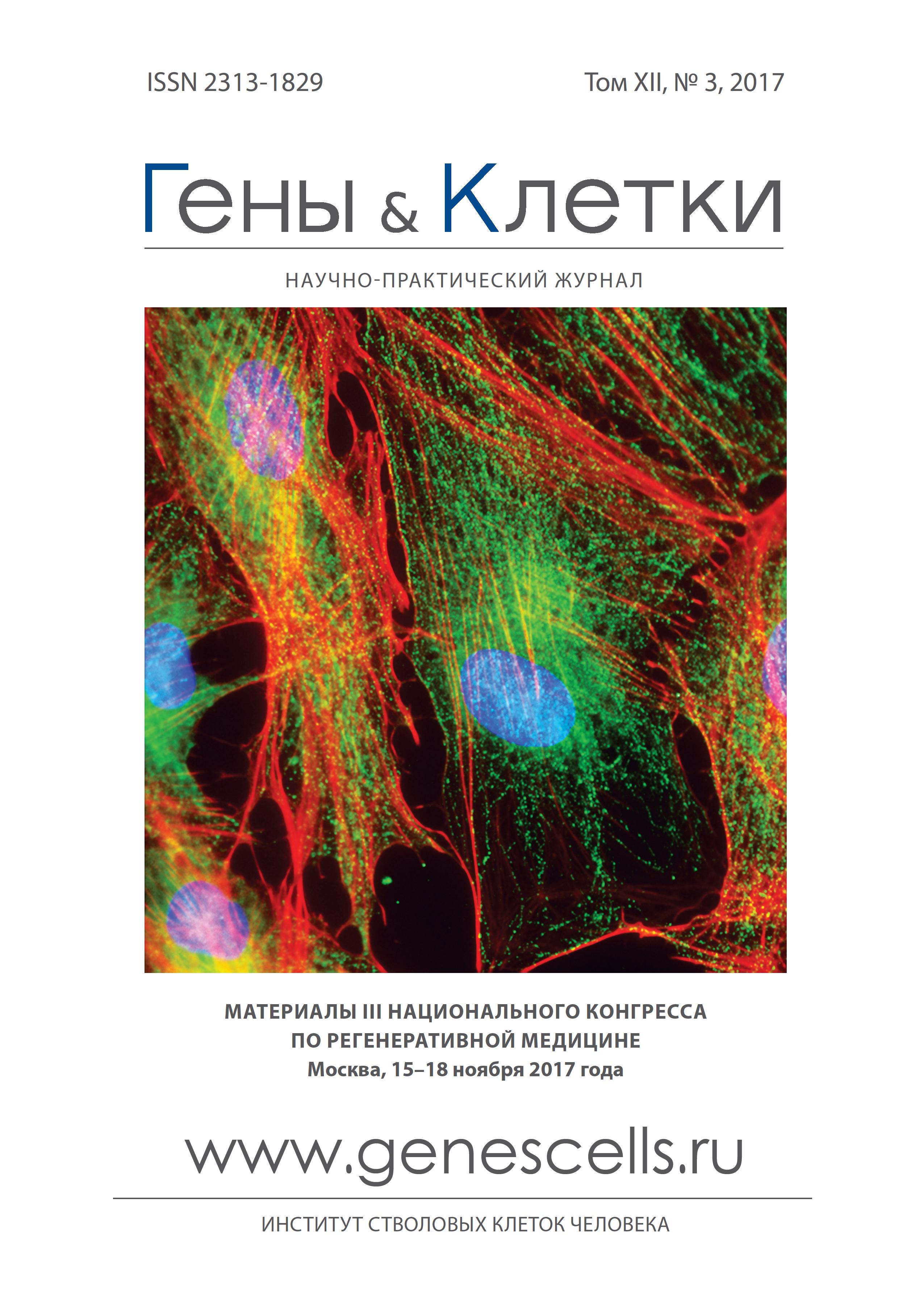
Cover Page


Cite item

Full Text

Abstract

Full Text

To date, one of the main global trends is the development of lab-on-a-chip systems, which permit us to study processes in conditions mimicking in vivo environment. These systems are particularly interesting for the pharmaceutical industry because they enable the increase in speed of drug development and provide standard conditions for drug screening and testing. As they are an essential part of an organism, blood vessels are one of the critical points for lab-on-a-chip development. Therefore, we sought to design a microfluidic device based on fibrin hydrogel, which can mimic a blood vessel. We studied 3D coculture of vasculogenic cells within a synthetically modified fibrin hydrogel. Fibrinogen was covalently linked with PEG-NHS to improve its degradability level and physical-optical properties. We studied the influence of the degree of protein PE-Gylation and the thrombin concentration used for the gelation on cell responses. Scanning electron microscopy analysis showed that the PEGylation degree and the thrombin concentration strongly influenced microstructural characteristics of the protein hydrogel. Human umbilical vein endothelial cells (HUVECs) and human adipose-derived stem cells (hASCs), used as vasculogenic co-culture, could grow in 5:1 PEGylated fibrin gels prepared using 0.2 U thrombin per 1 protein mg. This gel formulation supported hASCs and HUVECs spreading and the formation of cell extensions and cell-to-cell contacts. Expression of specific ECM proteins and vasculogenesis inherent cellular enzymatic activity were investigated by immunofluorescent staining, gelatin zymography, western blot, and RT-PCR analysis. After evaluation of the optimal gel composition and PE- Gylation ratio, this hydrogel was utilized to investigate vascular tube formation within a perfusable microfluidic system. The morphological development of this coculture within a perfused hydrogel system for 12 days led to the formation of the interconnected HUVEC-hASC network. The demonstrated PEGylated fibrin microflu-idic approach can be used for incorporating other cell types and represents a unique experimental platform. The work of the authors is supported financially by the grant from the Sechenov First Moscow State Medical University, Russia.
×

References

Supplementary files

Supplementary Files
Action
1. JATS XML

Copyright (c) 2017 Eco-Vector


СМИ зарегистрировано Федеральной службой по надзору в сфере связи, информационных технологий и массовых коммуникаций (Роскомнадзор).
Регистрационный номер и дата принятия решения о регистрации СМИ:
