





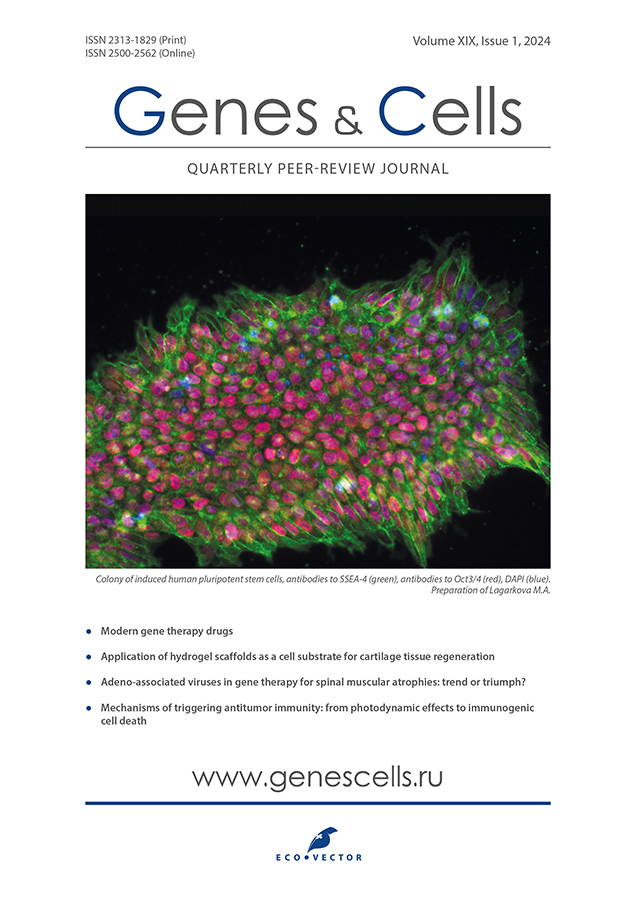
Genes & Cells
Peer-reviewed scientific and practical journal
Editor-in-chief
- Maria A. Lagarkova, Dr. Sci. (Biology), professor
ORCID iD: 0000-0001-9594-1134
Publisher
Founders
- Genes & Cells llc
- Lopukhin Federal Research and Clinical Center of Physical-Chemical Medicine of Federal Medical Biological Agency
- Eco-Vector
About
“Genes & Cells” (the old name is “Cell Transplantology and Tissue Engineering”) is a quarterly peer-reviewed scientific and practical journal.
The sections of the journal are formulated to fully disclose the target topics of the publication, convey to readers the opinions of leading experts in the field of biomedical technologies on topical issues of concern, acquaint them with the most significant recent foreign and domestic research, materials of thematic conferences, present analytical information on fundamental issues of biomedical technologies trends in the biotech business.
Thus, the journal does not just keep up with the time, but jointly with the website, which is an independent scientific information and analytical mass media, changes the views of representatives of medical specialties on the possibility of using biotechnologies in clinical practice; at the same time, we do not juggle with facts and do not impose subjective unverified data — all the tools of the journal and site are to convey to a wide circle of readers only objective scientific and analytical information.
Journal headings
- expert opinions
- cell technology news
- reviews
- original research
- clinical experience
- discussion and general theoretical work
- stem cell business
Types of manuscript
- reviews
- systematic reviews and metaanalyses
- original research
- clinical case reports and series
- letters to the editor
- short communications
- clinial practice guidelines
Publications
- in English and Russian
- quarterly, 4 issues per year
- continuously in Online First
- distribution in Hybrid model (subscription and in Open Access with Creative Commons CC BY-NC-ND 4.0 license)
Indexation
- SCOPUS
- Russian Science Citation Index
- Russian Science Electronic Library (eLibrary.ru)
- Google Scholar
- Ulrich's Periodicals directory
- WorldCat
- Dimensions
- Crossref
Current Issue
 Open Access
 Access granted
 Subscription or Fee Access
Vol 19, No 1 (2024)
- Year: 2024
- Articles: 11
- URL: https://genescells.ru/2313-1829/issue/view/8020
- DOI: https://doi.org/10.17816/gc.191

Reviews
Periodization of adaptation-compensatory remodeling of brain structures in incomplete permanent cerebral hypoperfusion in rats
Abstract
Bilateral one-stage ligation of the common carotid arteries in rats is the most common method of forming prolonged cerebral hypoxia with cognitive impairment. Pharmacological studies are most commonly performed at the early postoperative periods, up to 3 days. They are characterized by neuronal death, hypoenergetic state, and edema. In the acute period (3–8 days), changes are associated with the activation of astrocytes, which form intercellular cooperation between the neuron, hemocapillary, and respiratory burst of neutrophil granulocytes. Thus, the permeability of the blood–brain barrier increases, accompanied by the death of one part of the neurons and the improvement of the vitality of another part. The subacute period (from 8 days to 8 weeks) is accompanied by the death of neurons in a state of poor life support, microglial activation, myelin fiber damage, increased diameter of paravertebral arteries in the early period, and the development of astrocytosis and angiogenesis in the late period, which leads to increased lipid peroxidation, secondary damage, and neuronal death. In the late period, neurodystrophic changes appear, and minor neuronal apoptosis and increased permeability of the blood–brain barrier persist. Surviving neurons show metabolic activation and concentration of pericarions near the hemocapillaries.
 5-20
5-20


Modern gene therapy drugs
Abstract
Gene therapy is a modern and effective approach for treating diseases previously considered incurable by traditional methods. Its main strategy is to transfer the genetic material into the patient’s somatic cells to inhibit or promote the expression of a target gene/protein associated with disease development. This type of therapy is used in patients with few or no alternative treatment options.
Over the past two decades, gene therapy has produced promising clinical results, with many products approved for treating severe oncologic, hematologic, infectious, orphan, and/or inherited diseases, including monogenic and metabolic diseases. The scope of clinical indications and tissue targets for gene therapy is expanding every year.
This review examines new genetically engineered drugs recently introduced in global and domestic markets. These drugs are based on molecules of small interfering RNA (siRNA), mRNA, antisense nucleotides, and viral and plasmid vectors. Each group of drugs is unique and has its mechanism of action, depending on the purpose of the therapy.
21-42
Application of hydrogel scaffolds as a cell substrate for cartilage tissue regeneration
Abstract
Cell therapy or tissue engineering is currently one of the potentially effective strategies for repairing cartilage defects. Mesenchymal stromal cells and autologous and allogeneic chondrocytes obtained from cartilage biopsies from patients undergoing arthroscopic surgery are the most commonly used cells for tissue engineering. Matrices (scaffolds) often used during cell implantation can facilitate successful cell implantation. These can be static supporting or plastic hydrogel substances obtained by various methods from natural or synthetic materials, allowing cells to be delivered to the site damaged by injection. Significant advantages of biocompatible hydrogels in cartilage injury therapy are determined based on the properties of the natural extracellular matrix and the high plasticity required for adapting to irregular surfaces of the tissue defect and allowing injectable cell delivery. These characteristics make injectable hydrogels a promising tool for cartilage bioengineering.
This study highlights the progress in injectable hydrogels as carriers of different cells in the repair of cartilage tissue defects, as well as the current requirements and unresolved issues related to the use of such therapeutic approaches.
43-59
Brain neurotrophic factor BDNF: new data, functions and questions
Abstract
The brain-derived neurotrophic factor (BDNF) is a key modulator of neurogenesis, synaptogenesis, neuroregeneration, and cell differentiation in the nervous system. Impaired BDNF functioning is a characteristic of various neurological diseases, such as Alzheimer’s disease, multiple sclerosis, and depressive disorders. There is recent evidence that patients with COVID-19 have reduced BDNF levels in the blood plasma. Furthermore, exogenous BDNF and its mimetics have demonstrated therapeutic potential.
In this review, we systematized data of the BDNF gene structure, epigenetic and microRNA-mediated regulation of its expression, transcriptional variants of BDNF, and the effects of BDNF on neuronal and oligodendroglial differentiation. Further, we point out the gaps in the current knowledge about BDNF and propose experiments that can expand such knowledge and the range of possibilities for using BDNF in biomedicine. These include determining the expression pattern of all BDNF gene transcripts at different stages of differentiation and in different cell subpopulations and studying the role of receptor-independent BDNF signaling, circadian fluctuations in BDNF levels, and their role in physiological and pathophysiological conditions. Finally, for translational medicine, evaluating the effect of BDNF mimetics (including those immobilized on three-dimensional scaffolds for tissue engineering) on neuronal and oligodendroglial differentiation of pluripotent and polypotent cells and identifying molecular regulators of BDNF transcription, including small molecules and microRNAs capable of regulating BDNF gene expression, are crucial.
61-84
Adeno-associated viruses in gene therapy for spinal muscular atrophies: trend or triumph?
Abstract
The development of gene therapy in the 21st century is largely based on application of viral vectors, which have shown their effectiveness along with a fairly high safety profile. Among the vector systems, one of the leading places was taken by adeno-associated viruses (AAV), on the basis of which drugs were created for the treatment of severe hereditary monogenic diseases, including spinal muscular atrophies (SMA). Their use, on the one hand, is justified by the flexibility of AAV as a platform for the creation of gene therapy drugs, and on the other hand, it is often perceived as a kind of trend that has significant limitations. In this review, the focus is on two main aspects: AAV as a vector for the treatment of diseases from the SMA group and possible directions of development in this area and in gene therapy in general.
The review operates with recent data published after clinical trials and experimental studies during last decade, and also critically examines the possibilities of gene therapy using AAV, mentioning other existing approaches, incl. medical therapy for SMA.
Attention is also paid to the situation in the field of using AAV for the treatment of other hereditary diseases and the most acute problems faced by the use of drugs created on the basis of this promising vector system.
85-104
Immune cell balance as potential biomarker of progressing non-alcoholic fatty liver disease
Abstract
Nonalcoholic fatty liver disease (NAFLD) is a widespread chronic, slowly progressive metabolic multifactorial disease. It is represented by several clinical and morphological forms: steatosis, nonalcoholic steatohepatitis (NASH) (with or without fibrosis), and liver cirrhosis. The search for minimally invasive and cost-effective biomarkers of NAFLD is a key task in the diagnosis, staging of progression, and long-term monitoring of NAFLD. This article discusses the possibility of using immune cell balance as potential minimally invasive peripheral markers of NAFLD progression. In the progression of NASH from steatosis to fibrosis and cirrhosis, inflammation plays an important role because of the activation of Kupffer cells and increased migration of monocytes, dendritic cells, neutrophils, and activated T lymphocytes into the tissues. Macrophages originating from monocytes, with NASH progression, gradually begin to prevail over the pool of resident macrophages. The risk of NASH and fibrosis development in patients with NAFLD increases with the ratio of neutrophils/lymphocytes in the liver. An increase in the Th17 cell count and a decrease in T-regulatory cell count can contribute to increased hepatic steatosis and inflammation development in NAFLD and accelerate the transition from simple steatosis to steatohepatitis and fibrosis. Information on the participation of noncoding RNAs in the regulation of the balance of immune cells in NAFLD is presented, which also allows us to consider them as additional, along with cellular, markers of disease progression.
105-125
Mechanisms of triggering antitumor immunity: from photodynamic effects to immunogenic cell death
Abstract
The development of cancer immunotherapies provides hope to millions of patients for better clinical outcomes after tumor treatment. Thus, investigating the fundamental mechanisms of antitumor immunity activation is an urgent task. Numerous studies have outlined the effect of immunogenic cell death (ICD) on cancer cells, and this outcome is both sophisticated and simple. Different stimuli can cause ICD; however, photodynamic exposure has been proven to be an effective inducer of programed death on par with radiotherapy. The link between triggering a photodynamic response in cancer cells and triggering ICD has been poorly described in experimental works. The question of which molecular cascades are activated after photodynamic therapy (PDT) irradiation and the way damage-associated molecular patterns (DAMPs) are released is intriguing. Much is known about reactive oxygen species generation and endoplasmic reticulum stress but little about the Golgi apparatus. Photosensitizers of different types can exert different effects, including completely nonimmunogenic ones.
This review describes the cascades that link the induction of cell death by photodynamic exposure and the immunogenic pattern of DAMP release. The photosensitizers that have shown potential as ICD inducers and the different pathways of programed death that occur during PDT exposure are also discussed.
127-151
The caspase family: molecular bases of interaction in apoptosis and pyroptosis
Abstract
Both apoptotic and inflammatory caspases play a significant role in developing and maintaining an organism’s homeostasis. Recently, various studies have described various cross-interactions among various caspases. For instance, interleukin-1β activation is initiated by caspase-1 and caspase-8. Programmed cell death is launched not exclusively by internal and external factors to serve as a foundation for physiological development and realization of cellular and organism functions. The caspases involved in this process provide a complicated function related to cell homeostasis regulation. Caspases also participate in adaptation processes associated with changing environmental conditions, including microgravity.
Phenotypical analysis of knockdown laboratory animals can reveal the physiological functions of caspases, giving preference to mice. For instance, this approach allows us to determine the role of caspases in the pathogenesis of different pathologic conditions, such as malignancies and autoimmune and infectious diseases. Caspases are considered by a wide spectrum of authors as therapeutic targets.
In general, the topic of caspases and their functions is very broad. In this review, we only discuss some aspects of the impact of caspases on various types of cell death.
153-168
Original Study Articles
Sudden cardiac death in young athletes: exome sequencing results
Abstract
BACKGROUND: Ranking risks and prevention of sudden cardiac death in professional young athletes is a crucial unresolved problem in sports medicine. Intense physical exertion can lead to adaptive changes in the cardiovascular system, which can mask inherited diseases with predominant myocardial involvement, such as hypertrophic cardiomyopathy. Undiagnosed cases of such diseases can be a risk factor for fatal outcomes associated with training and competitive activities, making this problem extremely relevant.
AIM: To conduct a diagnostic search for possible molecular causes of cardiovascular diseases associated with a high risk of sudden death in young athletes.
MATERIALS AND METHODS: Whole-exome sequencing of DNA extracted from two groups of biomaterials was performed: nine autopsy samples of heart tissues from young athletes who died during intense physical exertion and three venous blood samples from active athletes of the Russian national team. Obtained data were subjected to bioinformatic analysis and clinical interpretation.
RESULTS: In total, 12 DNA samples were analyzed using a panel of 277 genes associated with the development of cardiovascular diseases with a high risk of sudden death. In 4 of 12 samples (33.3%), variants possibly related to the phenotype were found upon clinical interpretation of the sequencing results. A pathogenic variant was found in the MYBPC3 gene, leading to the development of hypertrophic cardiomyopathy (OMIM: 115197), and a potential pathogenic variant was found in the TRPM4 gene, associated with progressive familial heart block type IB (OMIM: 618531). Moreover, two variants with uncertain clinical significance were found in CAV3 and SCN1B.
CONCLUSION: Currently, data from high-throughput sequencing are collected to identify the molecular basis of cardiovascular diseases with a high risk of sudden cardiac death. Identifying young athletes who are carriers of pathogenic and possibly pathogenic gene variants is beneficial for preventing fatal outcomes and personalizing medical support for professional athletes.
169-180
The dynamics of microRNAs level associated with pathological venous angiogenesis in experimental toxic liver fibrosis in rats
Abstract
BACKGROUND: It is known that miRNAs are important in liver fibrogenesis. However, their use as targets for early diagnosis and treatment of fibrosis is far from use in clinical practice. Angiogenesis and sinusoid capillarization are important histological features of the process. Studies regarding the role of miRNAs in pathological angiogenesis and sinusoid capillarization are insufficient.
AIM: To study the molecular targets (miRNAs and mRNAs) dynamics of associated with pathological angiogenesis in toxic fibrosis of the liver; to evaluate the relationship of the selected molecular factors to the processes of restructuring the intrahepatic vascular system.
METHODS: Fibrosis and subsequent cirrhosis of the liver in rats of the Wistar line (males) were induced for 17 weeks by a freshly prepared solution of thioacetamide. The level of miRNA-19а-3р, miRNA-29b-3р, miRNA-29b-1-5p, miRNA-34b-5р, miRNA-125b-5р, miRNA-130a-5p, miRNA-195-5р, miRNA-449а-5р, miRNA-449с-5р, miRNA-466d, miRNA-489-3р, miRNA-495, miRNA-664-3р, miRNA-3085, miRNA-3558-3р in fresh frozen liver samples, was determined by Two-tailed RT-qPCR.
RESULTS: In this study, we found that throughout the experiment, the relative level of microRNAs varied in a wide range of values (10–3–104 rel. units). In most cases, it decreased at the point of transition from fibrosis to cirrhosis, while growth was observed only for microRNA-29b-3p. Statistically significant correlation relationships were established between microRNAs and the number of interlobular veins, interlobular arteries, sinusoids, and the area of connective tissue (p <0.05).
CONCLUSION: A joint analysis of morphological and molecular-genetic parameters allowed us to suggest that within the framework of the current experimental model of liver fibrosis and cirrhosis, the restructuring of the intrahepatic vascular bed and the progression of fibrosis are associated with the dynamics of the level of a number of microRNAs that we studied and Ang mRNA level.
181-199
Mitochondrial respiration of a primary mixed culture of neurons from hippocampus at various stages of differentiation
Abstract
BACKGROUND: Primary mixed culture of neurons is often used to evaluate the molecular mechanisms underlying neurodegenerative disorders. However, isolating cells from the brain is accompanied by profound changes in cell morphology, behavior, and metabolic rate due to enzymatic disintegration and microenvironmental changes in cells. In this regard, the mitochondrial basal respiration of neurons should be considered as an indicator of the formation of functional activity of the cell.
AIM: To evaluate mitochondrial respiration in a primary mixed culture of hippocampal neurons at various stages of differentiation.
METHODS: This study included mice of line CD-1 and was conducted in two series: the first studied the primary mixed embryonic culture on the 18th day of gestation (E18) and the second used the postnatal culture on the 2nd day after birth (P2). A Seahorse XF HS Mini (Agilent, USA) was used to measure the functional parameters of cell metabolism. The oxygen consumption rate was calculated based on the results of the mitochondrial respiration profile of the primary mixed culture built during its differentiation.
RESULTS: On the 5th day of neuronal differentiation in the culture, maximum mitochondrial respiration was established both in the hippocampal culture obtained from embryos on the 18th day of gestation and in the culture taken from mice on the 2nd day after birth. As cells differentiated in culture from days 2 to 11, the substrate oxidation rate increased almost twofold in the culture of hippocampal neurons obtained from embryos, which increased the metabolic potential.
CONCLUSION: The study results prove that the hippocampus can be used to study the role of mitochondria in neurogenesis.
201-210

Регистрационный номер и дата принятия решения о регистрации СМИ: